


Puerta de torniquetes del aeropuerto: Tipos, Características y cómo elegir la adecuada
2026-04-05


AnPuerta de torniquetes del aeropuerto no es solo una barrera. Es la primera y última línea de control de acceso entre tu terminal y tus pasajeros. Hazlo bien, y miles de viajeros atraviesan las zonas de abordaje en minutos sin fricciones. Equivocarte, y te enfrentas a colas, Brechas de seguridad, y fallos operativos que se propagan por toda tu terminal. Esta guía cubre todo tipo dePuerta de torniquetes del aeropuerto Disponible, Qué características realmente importan, y cómo ajustar la puerta adecuada a cada zona dentro de tu aeropuerto.
¿Qué es una puerta de torniquetes de aeropuerto??
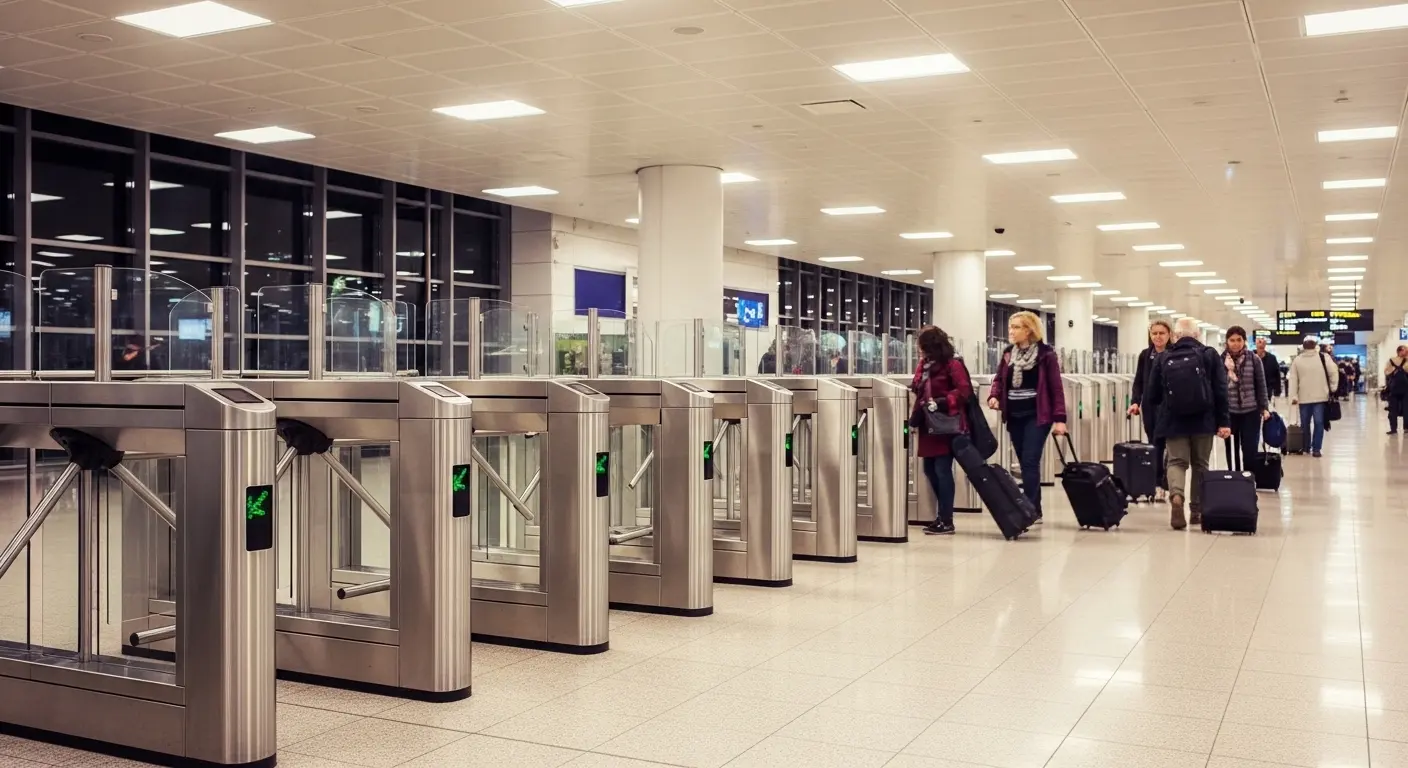
AnPuerta de torniquetes del aeropuerto es una barrera motorizada de control de acceso peatonal construida específicamente para entornos aeroportuarios de alto tráfico. Se encuentra en controles de seguridad, Carriles de embarque, Salas de llegadas, Corredores de inmigración, y zonas exclusivas para personal. Su función es verificar las credenciales y permitir que solo pasen a personas autorizadas, Uno a la vez, A gran velocidad.
A diferencia de las puertas que se usan en edificios de oficinas, Una versión para aeropuertos debe gestionar miles de pasajeros por hora. En realidad, Los principales aeropuertos internacionales procesan cientos de miles de pasajeros diariamente en todas las terminales activas. Ese tipo de carga requiere que las puertas se conecten directamente con los sistemas de control de salidas de la aerolínea (DCS), Bases de datos de inmigración, y plataformas de identidad biométrica. Ese nivel de conectividad del sistema es lo que distingue a un verdaderoPuerta de torniquetes del aeropuerto desde una barrera peatonal estándar.
Cada zona dentro de un aeropuerto también tiene diferentes demandas de flujo. Por ejemplo, Una puerta de abordaje necesita una barrera de solapas rápidas. Un corredor de inmigración puede necesitar eGates biométricos. Una zona de acceso de mantenimiento necesita una barrera perimetral de altura completa. Un tipo de puerta no cubre todos los casos de uso.
Por qué los entornos aeroportuarios necesitan puertas diseñadas específicamente
Las puertas comerciales estándar están diseñadas para patrones de tráfico de 9 a 5. Aeropuertos gestionados 24/7. El volumen de pasajeros aumenta bruscamente durante las ventanas de salida, Picos de llegada, y interrupciones de vuelos. En realidad, Un solo aeropuerto internacional de tamaño medio puede ver más allá 800,000 Pasajeros diarios en todas las terminales.
Primero, Los aeropuertos exigen un alto rendimiento, Significado 30 o más personas por minuto en las zonas de abordaje. Siguiente, requieren casi cero tiempo de inactividad, Porque una puerta fallida en un carril de embarque genera problemas inmediatos de gestión de pasajeros. Finalmente, Las puertas de aeropuerto deben gestionar perfiles mixtos de pasajeros: Familias con carritos, Viajeros mayores, Usuarios de silla de ruedas, y personas que transportaban equipaje de cabina sobredimensionado.
Como resultado, Un Diseñado para ExpresarseSistema de Puertas de Velocidad del Aeropuerto es la única opción fiable para entornos de embarque y llegada. Los torniquetes comerciales genéricos no pueden satisfacer estas demandas combinadas, y la diferencia se hace evidente en la primera hora punta de operación.
Tipos de sistemas de puertas de torniquetes de aeropuerto
Elegir el tipo adecuado comienza con entender dónde se instalará la puerta y qué perfil de pasajeros servirá.
Barrera de solapas: El estándar de la puerta de embarque
La barrera de solapas es la más extendidaPuerta de torniquetes del aeropuerto Tipifica las zonas de embarque y salas de salida. Sus paneles retráctiles se abren en menos de medio segundo y se cierran igual de rápido. El rendimiento suele alcanzar 30 Para 45 personas por minuto por carril, Es ideal para ventanas de salida muy cerradas, donde cada segundo cuenta.
Las barreras de solapas soportan configuraciones de carriles anchos, de 550mm a 900mm, Así que los pasajeros pueden moverse con equipaje de mano sin girar de lado. La mayoría de los modelos incluyen matrices infrarrojas multihaz que detectan el tailgating, Pasaje incompleto, y los intentos de entrada inversa. Para los carrils de embarque que requieren tanto soporte para escaneo de códigos de barras como para código QR, elPuerta de torniquetes con código de barras gestiona tanto formatos de tarjetas de embarque 1D como 2D, despejando a cada pasajero en menos de dos segundos.
Puerta de Velocidad / Torniquete óptico
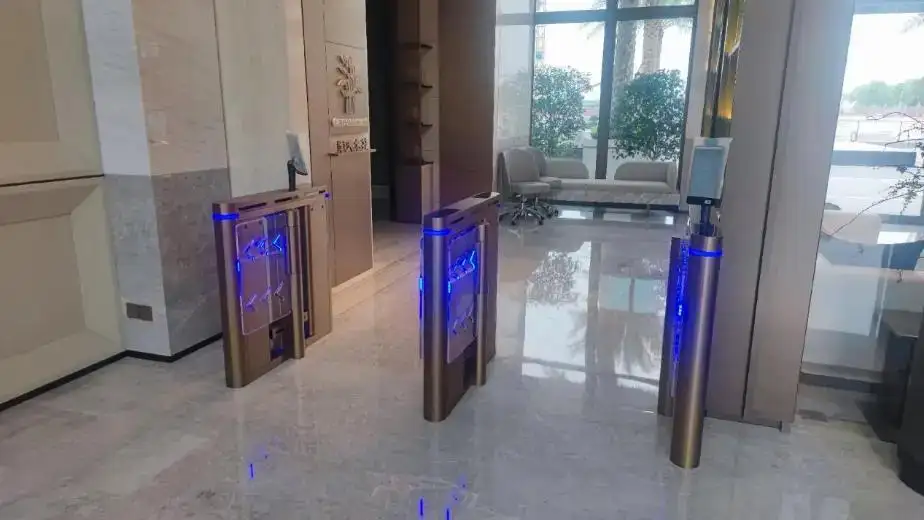
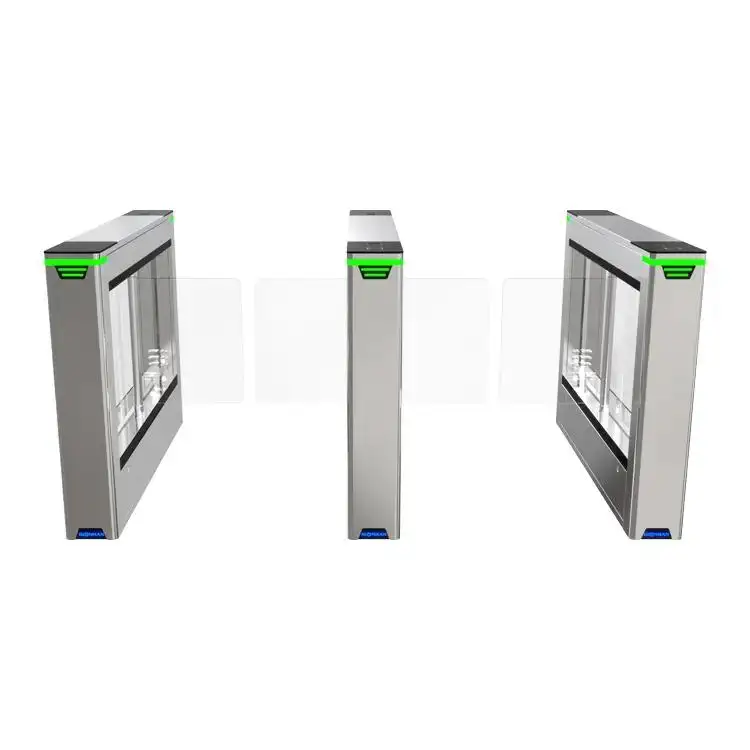
Las compuertas de velocidad utilizan paneles retráctiles de vidrio o acrílico y funcionan a velocidades de rendimiento muy altas, a menudo superando 40 personas por minuto. Suelen desplegarse en las salas de llegada, Salas VIP, y zonas terminales premium donde la estética limpia importa junto con el control físico de acceso.
ElTorniquete de puerta corredera de cristal Se adapta bien a estos entornos. Combina 8 Pares de detectores infrarrojos, Paneles de vidrio templado, y autorización bidireccional en un factor de forma que se adapta a la arquitectura moderna de terminales sin parecer industrial. Las compuertas de velocidad también admiten anchos de carril de hasta 914 mm, que acomoda a los pasajeros con ayudas a la movilidad, Carritos de equipaje, y carritos sin cambio de carril.
Torniquete de puerta giratoria
Las compuertas basculantes ofrecen las opciones de paso más anchas de cualquier tipo de barrera y desempeñan un papel clave en los carriles de accesibilidad y que cumplen con la ADA. La mayoría de los aeropuertos instalan una puerta giratoria junto a las filas estándar de barreras de solapas. Esta configuración gestiona a usuarios de sillas de ruedas y equipaje sobredimensionado sin interrumpir el flujo general de pasajeros en los carriles adyacentes.
ElCompuerta giratoria bidireccional puede atender tráfico de doble sentido. En la práctica, Esto es útil en zonas donde el flujo de pasajeros entrantes y salientes alterna a lo largo de las diferentes fases de vuelo durante el día.
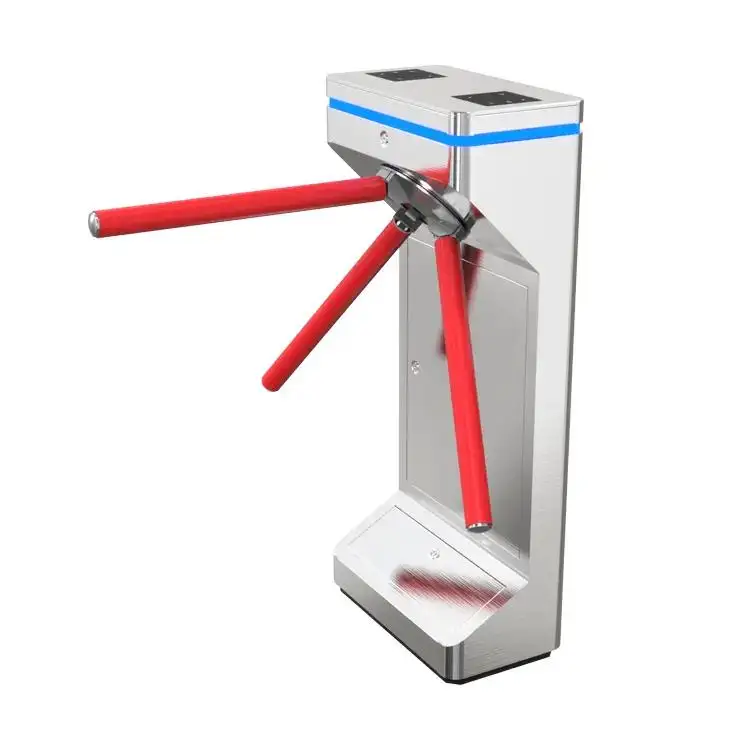
Puerta de torniquetes a la altura de la cintura
Para zonas aeroportuarias de menor seguridad, como las zonas generales de registro, Instalaciones de comedor para el personal, o puntos de acceso al aparcamiento en tierra, aPuerta de torniquetes a la altura de la cintura proporciona una gestión básica de acceso a un coste práctico. Estos no se utilizan en puertas de embarque seguras, Pero desempeñan un papel real en el control más amplio de las instalaciones aeroportuarias en áreas no seguras.
Compuerta de torniquetes de altura completa
Los modelos de altura completa se mantienen de suelo a techo y se utilizan en las zonas aeroportuarias más sensibles: Áreas de manipulación de carga, Mantenimiento del corredor, Zonas restringidas de personal, y puntos de acceso perimetral. Su estructura física impide trepar por encima o agacharse, que los sistemas solo electrónicos simplemente no pueden garantizar.
ElTorniquete de altura completa anti-tailgating está construido específicamente para estos entornos. Combina construcción de acero de grado industrial con bloqueo electrónico y operación de seguridad contra fallos, lo que lo convierte en la opción correcta para cualquier área donde el acceso no autorizado conlleve un riesgo operativo serio.
Características clave a tener en cuenta en la puerta de torniquetes de un aeropuerto
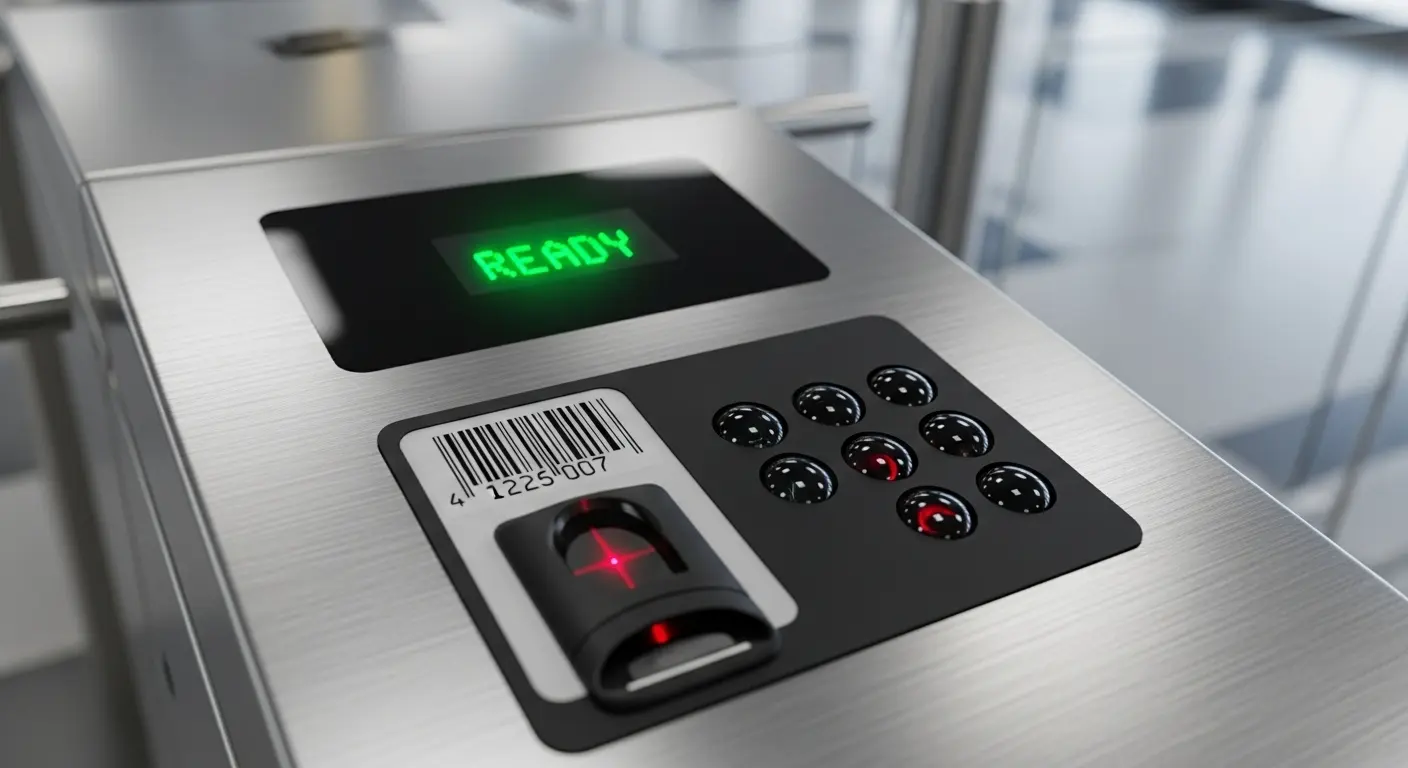
Al evaluar cualquieraPuerta de torniquetes del aeropuerto, Estas características separan los productos de grado aeroportuario de las barreras comerciales estándar.
Velocidad de rendimiento
Para las solicitudes de embarque, Busca una tasa mínima de aprobado de 30 personas por minuto. Barreras de solapas y puertas de velocidad lideran consistentemente en esta categoría, con modelos de primera categoría alcanzando 45 personas por minuto por carril.
Detección anti-colación
La aplicación del paso por una sola persona es innegociable en cualquier zona aeroportuaria segura. Los mejores sistemas utilizan matrices infrarrojas multizona en lugar de sensores de haz único. ElCompuerta AB anti-tailgating utiliza detección infrarroja de doble zona para señalar intentos de seguimiento cercano y pasadas forzadas de entrada única antes de que crucen el punto de control.
Operación de seguridad
En cualquier corte de luz o alarma de incendios, Las puertas deben abrirse automáticamente por defecto. Busca respaldo de batería, Liberación de emergencia, y configuraciones de apertura por defecto como características estándar, No son mejoras opcionales.
Opciones de ancho de carril
Los pasajeros del aeropuerto llevan equipaje. Un ancho de paso de 550 mm es el mínimo absoluto para cualquier carril orientado al pasajero. Las zonas de alto tráfico y los carriles de accesibilidad deben especificar entre 800 mm y 900 mm para evitar crear cuellos de botella en las horas punta.
Nivel sonoro
Los motores sin escobillas de corriente continua funcionan de forma silenciosa y son esenciales en entornos terminales concurridos. El ruido de la puerta aumenta el estrés de los pasajeros durante las horas punta de salida y se refleja negativamente en la experiencia de la terminal.
Certificaciones
Como mínimo, busca CE, FCC, ISO9001, y certificaciones ROHS. Estos confirman que la puerta cumple con los requisitos de compatibilidad electromagnética, Normas de seguridad, y estándares de gestión de calidad apropiados para infraestructuras aeroportuarias críticas.
Tecnología inteligente: ¿A qué se conectan las puertas de torniquetes de aeropuertos modernos?
La brecha entre una barrera básica y una verdaderaPuerta de torniquetes del aeropuerto El sistema se reduce a a qué se conecta. Los despliegues modernos en aeropuertos integran las puertas en un ecosistema tecnológico más amplio, No como hardware independiente.
Escaneo de tarjetas de embarque con código de barras y código QR
Los pasajeros escanean las tarjetas de embarque en el carril. La puerta dice la credencial, lo comprueba con la base de datos DCS, y se abre. ElPuerta de torniquetes con código de barras soporta tanto formatos de código de barras 1D como de código QR 2D, despejando a cada pasajero en menos de dos segundos, lo cual es fundamental para mantener el ritmo de la pista durante las ventanas de abordaje.
Verificación biométrica
Reconocimiento facial, Lectores de huellas dactilares, Escáneres de iris, y los lectores de venas de palma pueden montarse directamente en los armarios de puerta. Para carriles de inmigración y abordaje de alta seguridad, La verificación biométrica comprueba la identidad frente a las bases de datos de documentos de viaje en tiempo real. Esto elimina la dependencia de documentos físicos y acelera significativamente el procesamiento por pasajero.
Gestión de puertas en la nube
UnPuerta de torniquetes basada en la nube se conecta a una plataforma de gestión central a través de una red privada. Los operadores aeroportuarios pueden entonces monitorizar el estado de las puertas, Cambios en los permisos de acceso push, y extraer registros detallados de pasajes de un único panel de control. Esto funciona en múltiples terminales o en varios aeropuertos desde una sola interfaz.
RFID y acceso con tarjetas inteligentes para el personal
Los carriles de torniquetes para el personal suelen funcionar con credenciales RFID. Conectar las puertas a los sistemas de RRHH significa que los derechos de acceso se actualizan automáticamente cuando un empleado cambia de rol o se marcha. En la práctica, Esto cierra la brecha de acreditación que genera vulnerabilidades de seguridad en entornos de personal de grandes aeropuertos.
Guía zona por zona: Coincidencia del tipo de puerta con la ubicación del aeropuerto
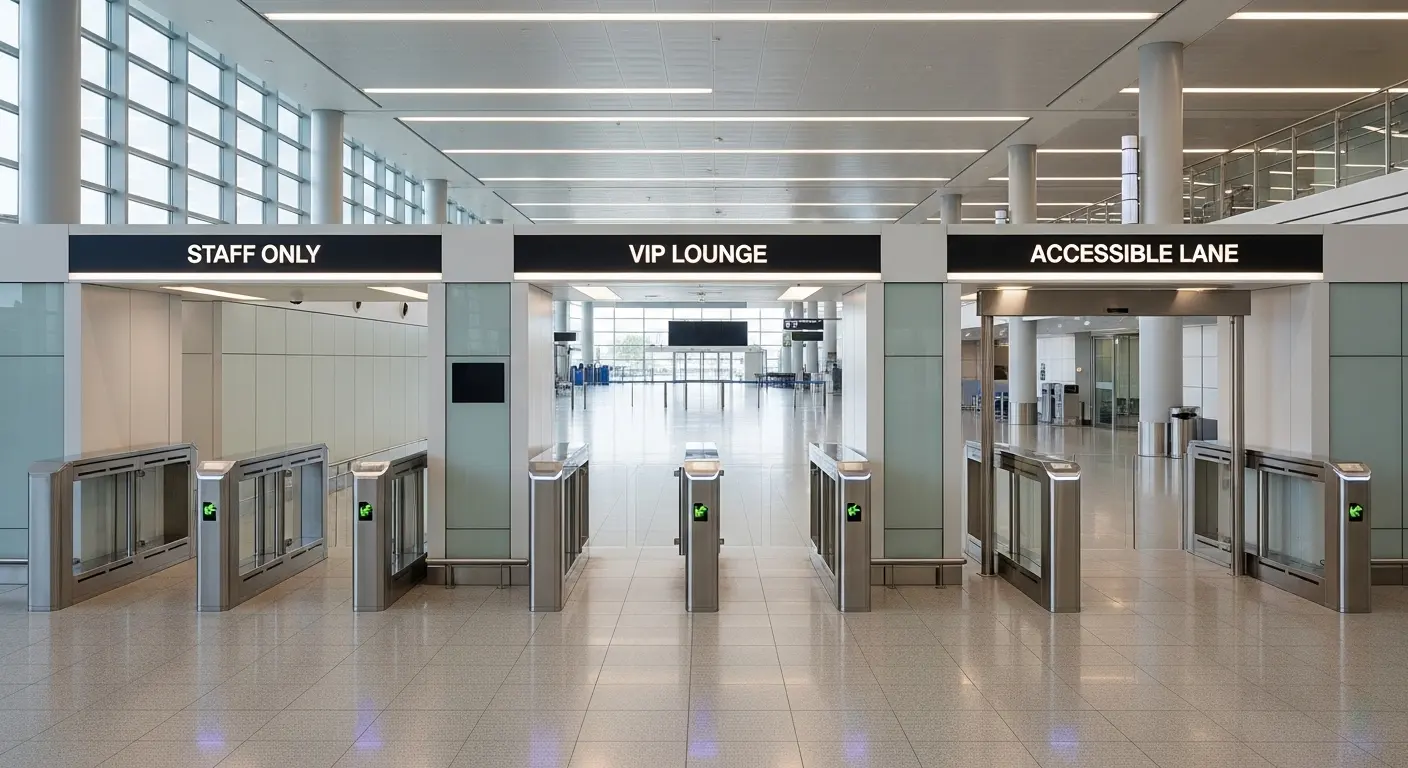
Aquí es donde la mayoría de los compradores cometen el mayor error. Se centran en una única especificación de puerta en lugar de asignar cada zona aeroportuaria a sus requisitos específicos. Utiliza este marco como punto de partida:
| Zona Aeroportuaria | Tipo de puerta recomendado | Prioridad clave |
|---|---|---|
| Puertas de embarque | Barrera de solapas / Puerta de velocidad | Velocidad de rendimiento |
| Inmigración / Control de pasaportes | eGate con lector biométrico | Precisión de identidad |
| Salas de llegadas | Puerta de velocidad / Compuerta giratoria | Estética y flujo de pasajeros |
| Salas VIP | Compuerta de velocidad de cristal o compuerta giratoria | Funcionamiento silencioso y estética |
| Pasillos del personal | A toda altura o anti-tailgating | Seguridad física del perímetro |
| Accesible / Carriles ADA | Compuerta abatible de carril ancho (900mm ) | Cumplimiento y accesibilidad |
| Áreas de carga y mantenimiento | Torniquete de altura completa | Control perimetral |
Más allá del tipo de puerta, también evalúa los requisitos de conexión al sistema (¿A qué plataformas necesita enlazarse??), Objetivos de rendimiento en horas punta, Condiciones ambientales (Interior vs. al aire libre, Climatizado vs. terminales húmedos), y si el aeropuerto tiene restricciones de imagen o arquitectónicas en cuanto al acabado y las dimensiones de los armarios.
El torniquete Ironman ha suministradoPuerta de torniquetes del aeropuerto sistemas en múltiples proyectos internacionales, con dimensiones de armario a medida, Opciones de acabado, y configuraciones de lectores disponibles para especificaciones específicas de terminales.
Errores comunes al especificar una puerta de torniquetes de aeropuerto
Evitar estos cuatro errores puede ahorrar importantes costes operativos y problemas de seguridad tras la instalación.
Centrándose únicamente en el precio unitario. Las compuertas de bajo coste a menudo fallan bajo continuos 24/7 Ciclos de carga en aeropuertos. Una puerta fallida en un carril de embarque crea problemas inmediatos de gestión de pasajeros y obliga a procesar manualmente, que es más lento por naturaleza. El coste operativo de por vida útil del tiempo de inactividad supera con creces el ahorro inicial de una unidad más barata.
Ignorar los requisitos de conectividad del sistema. Una puerta que no puede conectarse a tu DCS, Plataforma biométrica, O el sistema de control de acceso no es una solución. Crea una solución manual que ralentiza todo el carril y anula el propósito del control de acceso automatizado. Verifica siempre la compatibilidad del protocolo antes de comprar.
Subestimación del ancho de carril. Anchos comerciales estándar de 550 mm trabajan para edificios de oficinas. En los aeropuertos, Los pasajeros viajan con equipaje de mano, Mochilas, y a veces carritos. Especifica carriles de 800 mm a 900 mm para cualquier zona principal orientada a pasajeros como referencia, No es una mejora.
Saltarse la especificación anti-tailgating. En entornos de alto volumen, El seguimiento está casi garantizado sin una detección adecuada de múltiples sensores. Los sensores de haz único no son suficientes para la seguridad de grado aeroportuario. Exige infrarrojo bizona o multihaz como línea estándar en tu especificación.
Preguntas más frecuentes: Puertas de torniquetes del aeropuerto
¿Qué es una puerta de torniquetes de aeropuerto y dónde se utiliza?
AnPuerta de torniquetes del aeropuerto es una barrera motorizada de control de acceso peatonal utilizada en las puertas de embarque, Puntos de control de inmigración, Salas de llegadas, Pasillos del personal, y zonas restringidas dentro de los aeropuertos. Verifica las credenciales (código de barras, biométrico, o RFID) y controla la entrada una persona a la vez, conexión directa a sistemas informáticos de aerolíneas y seguridad.
¿Qué tipo de puerta de torniquetes de aeropuerto es la mejor para las zonas de embarque??
Los torniquetes de barrera de solapas y las compuertas de velocidad funcionan mejor para los carriles de abordaje. Ambos ofrecen tasas de rendimiento de 30 Para 45 personas por minuto por carril y soporte para escanear código de barras y código QR directamente en la puerta. Sus rápidos tiempos de respuesta en los paneles mantienen el ritmo de los carriles estable incluso durante los picos de abordaje.
¿Puede una puerta de torniquetes de aeropuerto conectarse con sistemas biométricos??
Sí. La más modernaPuerta de torniquetes del aeropuerto Las modelos apoyan el reconocimiento facial, Huellas, iris, y lectores de venas de palma, ya sea como módulos integrados o periféricos adicionales. Pueden conectarse con las bases de datos de DCS y de inmigración de las aerolíneas para verificar la identidad en tiempo real, eliminación de la necesidad de comprobaciones manuales de documentos.
¿Qué ancho debe tener el carril de la puerta de torniquetes de un aeropuerto??
Para uso general de pasajeros con equipaje de mano, El ancho mínimo recomendado de carril es de 550 mm. Carriles de accesibilidad, Zonas principales de abordaje, y los corredores de llegada deben especificar configuraciones de 800 mm a 900 mm para soportar equipaje, Cochecitos, Ruedas, y ayudas a la movilidad sin crear cuellos de botella.
¿Qué certificaciones debería tener una puerta de torniquetes de aeropuerto??
Busca CE, FCC, ISO9001, y certificaciones ROHS como estándares mínimos. Estos confirman que la puerta cumple con los requisitos de compatibilidad electromagnética, Estándares internacionales de seguridad, y estándares de gestión de calidad apropiados para infraestructuras aeroportuarias críticas. Los productos Ironman Turniquetes cuentan con las cuatro certificaciones.
