


Sistema de Control de Acceso a la Compuerta de Torniquetes: Tipos, Componentes y cómo elegir la configuración adecuada
2026-04-06


UnSistema de control de acceso a la puerta de torniquetes Hace una cosa en el fondo: Decide quién entra y quién no. Cada vez que se escanea una credencial y se abre una barrera, Ese sistema está funcionando exactamente como debe. Ya sea que estés asegurando una oficina corporativa, Un campus universitario, o una instalación de transporte, La combinación del hardware adecuado de la puerta y la tecnología de control adecuada determina cómo resisten tus puntos de entrada bajo la presión diaria real.
Esta guía explica cómo unSistema de control de acceso a la puerta de torniquetes Obras, De qué consiste, qué tipos de puertas se adaptan a qué entornos, y qué buscar antes de comprometerte a comprar.
¿Qué es un sistema de control de acceso para puertas de torniquete??
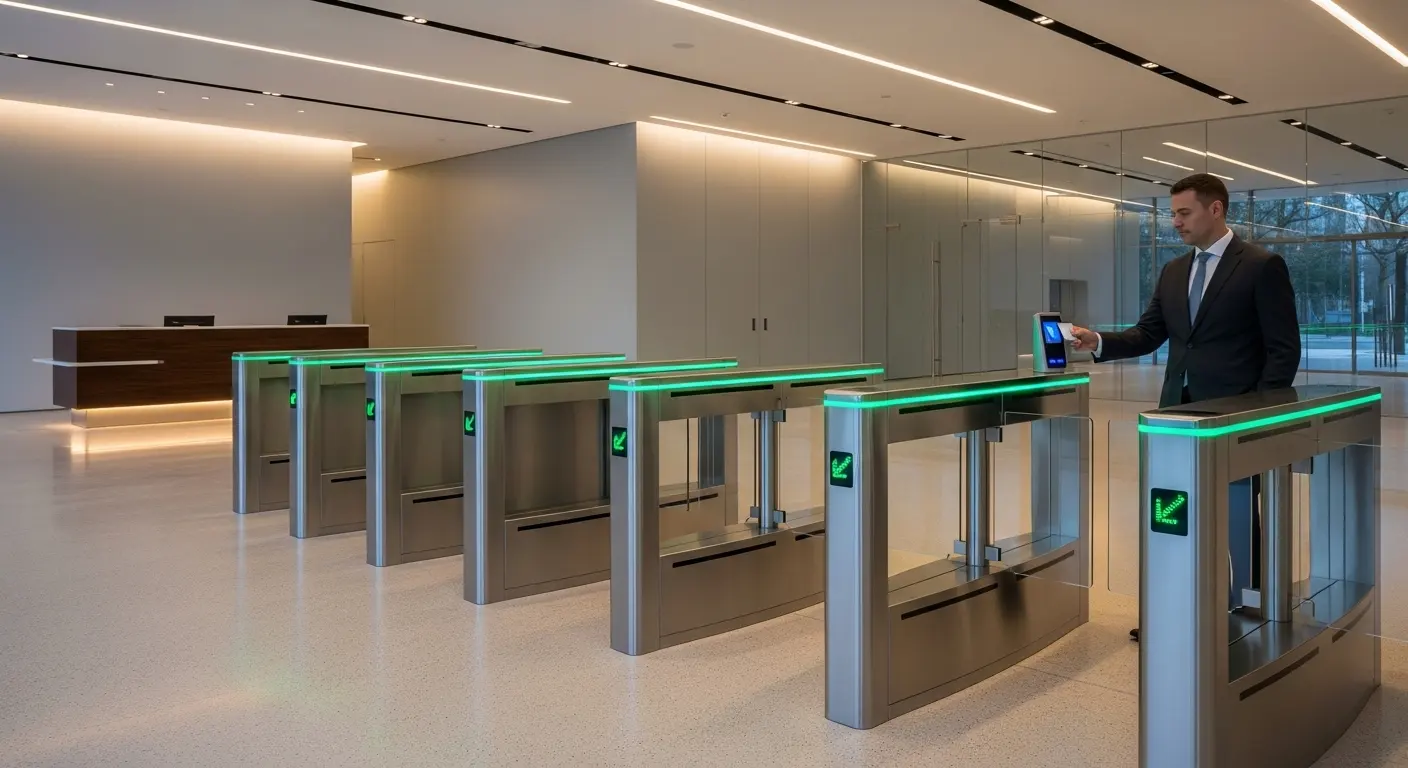
UnSistema de control de acceso a la puerta de torniquetes es una combinación de hardware físico de puertas y tecnología de verificación electrónica que gestiona quién puede entrar o salir de un área segura. No es solo una barrera, es un sistema conectado que incluye un lector de credenciales, un controlador que procesa la verificación, y una puerta física que responde al resultado.
El sistema funciona en una secuencia clara de tres pasos. Primero, Una persona presenta una credencial al lector. Siguiente, El controlador comprueba esa credencial con una lista autorizada. Por fin, si es válido, Se abre la puerta. Si no, permanece cerrado y se dispara una alerta.
Las versiones modernas van mucho más allá de esa secuencia básica. Se conectan con software de RRHH, Plataformas de asistencia, Sistemas de gestión de edificios, y paneles de control en la nube en tiempo real. Eso los convierte en mucho más que una barrera física. Actúan como puntos de datos activos para la seguridad, Seguimiento de asistencia, y la información operativa — todo funcionando con el mismo hardware que abre y cierra una puerta.
Explora toda la gama dePuerta de torniquetes modelos para ver cómo los tipos de hardware se asignan a diferentes entornos de entrada.
Componentes principales de un sistema de control de acceso a puerta de torniquetes
Entender los cuatro componentes principales te ayuda a especificar la configuración adecuada y evitar costosos problemas de compatibilidad tras la instalación.
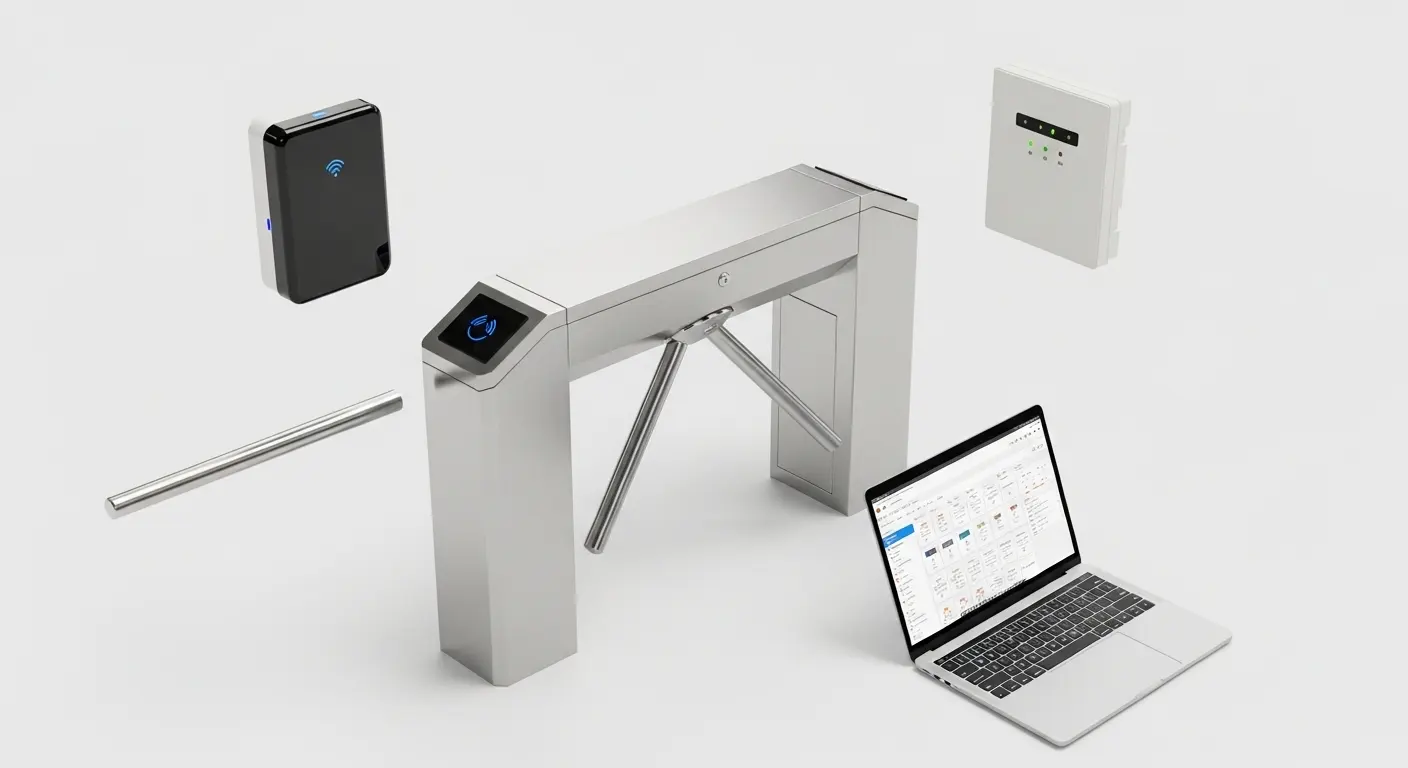
Hardware de puertas
Esta es la barrera física — el panel de solapas, Brazo de trípode, Rotor de altura completa, o panel deslizante de cristal. El hardware de puertas es responsable del control físico de accesos, Aplicación contra el acola, Funcionamiento a prueba de fallos durante cortes de suministro eléctrico, y ancho de pasaje. La calidad de la puerta determina directamente cuánto tiempo sobrevive el sistema en entornos de alto tráfico en funcionamiento 24 horas al día.
Lector de credenciales
Los lectores aceptan la señal — deslizar la tarjeta RFID, Escaneo de códigos QR, Huellas, Reconocimiento facial, o credencial móvil. El tipo de lector define la rapidez y la precisión con que cada persona cruza la puerta. Por ejemplo, aPuerta de torniquetes con código de barras el lector procesa las tarjetas de embarque QR en menos de dos segundos, mientras que un lector de huellas dactilares tarda un poco más pero elimina por completo el intercambio de credenciales.
Controlador de acceso
El mando es la mente del montaje. Recibe la señal de credencial, lo comprueba con una lista de permisos de acceso, y envía una orden de abrir o negar a la puerta. Los mandos pueden ser independientes, es decir, las listas de permisos se almacenan en el propio dispositivo, o en red, es decir, un servidor central o una plataforma en la nube gestiona permisos en múltiples carriles y ubicaciones.
Software de gestión
Aquí es donde ocurre toda la administración. Los gestores añaden o eliminan usuarios, establecer permisos basados en el tiempo, Informes de entrada por tirada, y recibir alertas en tiempo real. UnPuerta de torniquetes basada en la nube La configuración traslada todas estas funciones a un panel web, haciendo posible la gestión remota desde cualquier ubicación sin servidores en el sitio ni sobrecarga de TI.
Tipos de compuertas de torniquetes utilizadas en sistemas de control de acceso
Cada tipo de puerta cumple un nivel de seguridad diferente, Volumen de tráfico, y entorno físico. Así es como se relacionan con escenarios reales de despliegue.
Torniquete Trípode
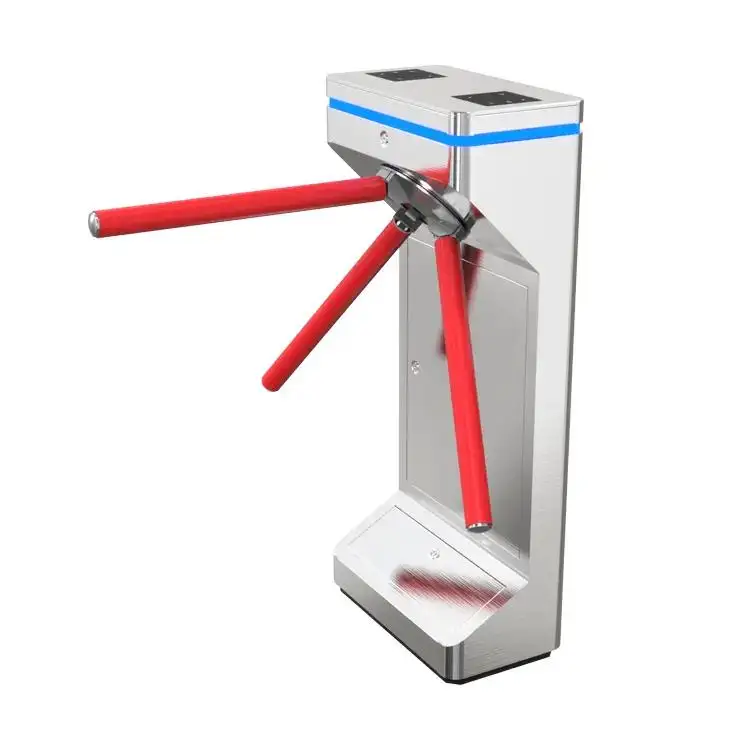
El trípode es la opción de entrada en la mayoría de los casosSistema de control de acceso a la puerta de torniquetes Configuraciones. Tres brazos giratorios proporcionan control de acceso a la altura de la cintura a un coste práctico. Los trípodes funcionan bien para entornos de tráfico medio: Puntos de entrada a la fábrica, Instalaciones deportivas comunitarias, y los vestíbulos de oficinas generales manejando bajo 20 personas por minuto.
No están diseñados para entornos de transporte de alto volumen donde la velocidad de rendimiento es crítica, Pero para las aplicaciones adecuadas son fiables, de bajo mantenimiento, y fácil de integrar con lectores RFID básicos.
Puerta de barrera de solapas
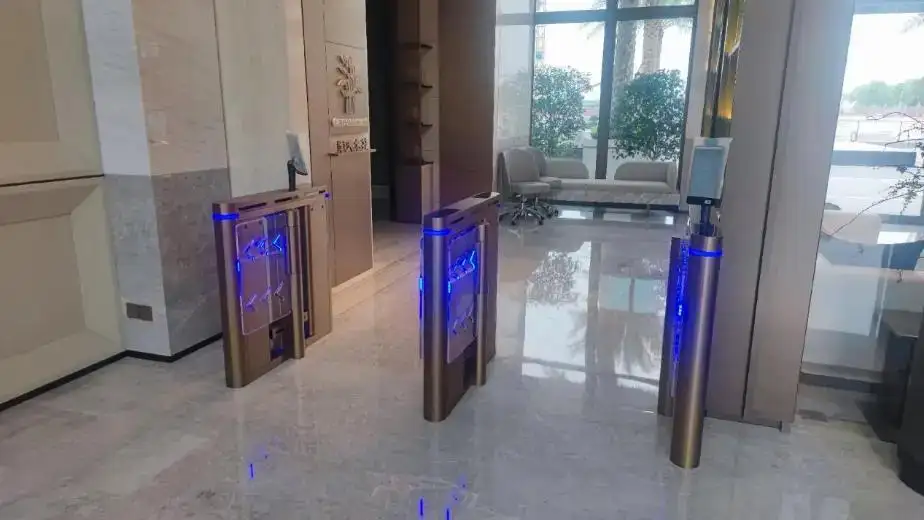
La barrera de solapas es el tipo de puerta más utilizado tanto en empresas como en empresas y comercialesSistema de control de acceso a la puerta de torniquetes Configuraciones. Sus paneles retráctiles se abren en menos de medio segundo y soportan tasas de rendimiento de hasta 45 personas por minuto por carril. Opciones de carriles más anchos, típicamente de 600 mm a 800 mm, Acomodar a las personas que llevan bolsas o utilizan ayudas a la movilidad.
Las barreras de solapas también tienen el perfil estético más fuerte para vestíbulos de edificios de oficinas. La mayoría de los modelos soportan RFID, Código QR, biométrico, y lectores móviles de credenciales montados directamente en el armario de la puerta.
Puerta de Velocidad / Torniquete óptico
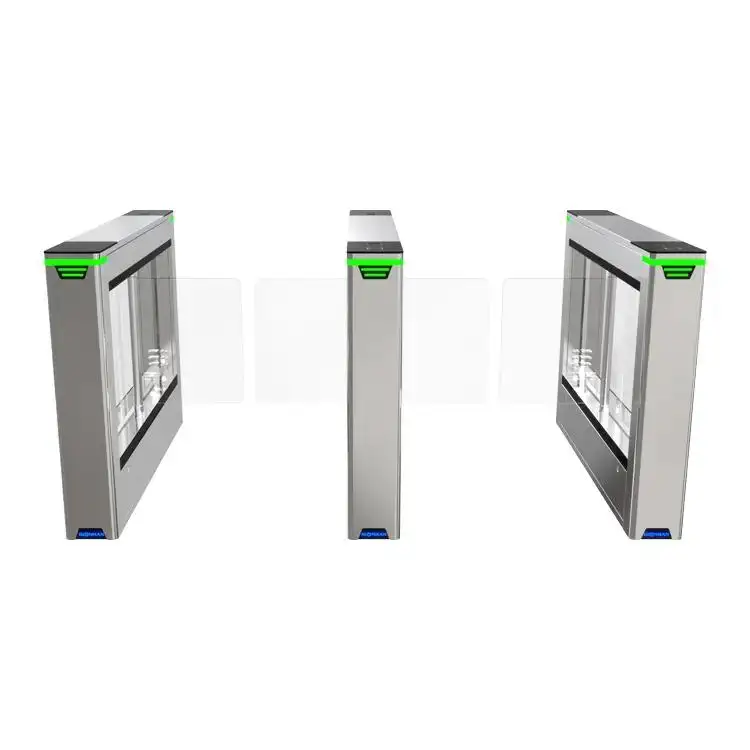
Las compuertas de velocidad utilizan paneles retráctiles de vidrio o acrílico y funcionan a las tasas de mayor rendimiento de cualquieraSistema de control de acceso a la puerta de torniquetes Gama de productos. Se adaptan a entornos premium: Oficinas financieras, Áreas de terminales VIP, y lobbies institucionales donde tanto el diseño limpio como el flujo rápido de peatones importan.
ElControl de acceso a torniquetes de la puerta de velocidad en Reino Unido Alcance combina autorización bidireccional, Anchos de carril de hasta 914 mm, y soporte para lectores multicredenciales en un único armario diseñado para uso comercial de alto tráfico.
Torniquete de altura completa
Para entornos de alta seguridad donde la prevención física importa tanto como el control electrónico, El torniquete de altura completa es la única opción. En unSistema de control de acceso a la puerta de torniquetes contexto, Este es el tipo de puerta de seguridad física más alta disponible. Su diseño de suelo a techo evita que se escale, arrastrándose por debajo, o forzando el paso.
ElTorniquete de control de acceso a toda altura modelo soporta tanto lectores RFID como biométricos, con configuraciones de bloqueo electrónico y fail-secure integradas. Centros de datos, Salas de servidores, Instalaciones de carga, y los corredores gubernamentales restringidos son los entornos principales para este tipo de puerta.
Puerta giratoria
Las puertas batentes ofrecen el carril de paso más ancho y sirven como opciones conforme a la ADA dentro de una fila de puertas con varios carriles. En el campus o en entornos corporativos, Normalmente se instala una puerta basculante junto a los carriles con barrera de solapas para atender a los usuarios de sillas de ruedas, Carros de material, y visitantes que llevan carritos.
Opciones de credenciales para tu sistema de control de acceso a la puerta de torniquetes
El tipo de credencial que elijas tiene un impacto más real del que la mayoría de los compradores esperan. Define la velocidad a la que se espera, Qué seguro, y lo cómodo que resulta todo el montaje para los usuarios cada día.
Tarjeta RFID / Tarjeta inteligente
La credencial más utilizada en cualquierSistema de control de acceso a la puerta de torniquetes. Las cartas son rápidas (bajo 0.5 segundos por lectura), rentable a gran escala, y fácil de manejar. La limitación es que las cartas pueden compartirse, extraviado, o robado, por eso muchos sitios los combinan con un factor secundario como PIN o biometría.
Verificación biométrica
Reconocimiento facial, Huellas, iris, Y los lectores de Palm Vein eliminan por completo el intercambio de credenciales. Requieren un poco más de tiempo de procesamiento por persona, pero ofrecen confirmación a nivel de identidad. Para zonas de alta seguridad, La biometría es el estándar recomendado, no una mejora opcional.
Código de barras y código QR
Ideal para poblaciones de visitantes rotativas: Estadios, Aeropuertos, Eventos, y centros de transporte. ElPuerta de torniquetes con código de barras gestiona tanto códigos de barras 1D como códigos QR 2D, Validación de tickets, Tarjetas de embarque, y credenciales temporales de visitante en tiempo real sin necesidad de preinscripción.
Credenciales móviles (BLE/NFC)
Los smartphones sustituyen a las tarjetas físicas usando Bluetooth de baja energía o comunicación de campo cercano. La adopción corporativa está creciendo rápidamente porque no hay tarjeta física que emitir, Pista, o reemplazar. Un teléfono perdido significa que la credencial se revoca en segundos desde el panel de gestión — sin necesidad de desactivar físicamente.
Código PIN
El tipo de credencial más sencillo, Usado en escenarios de baja seguridad o de respaldo. El acceso solo por PIN rara vez se recomienda como método principal en cualquier otroSistema de control de acceso a la puerta de torniquetes porque los PINs se comparten fácilmente y no están vinculados a una persona concreta.
Donde se utilizan sistemas de control de acceso a la compuerta de torniquetes
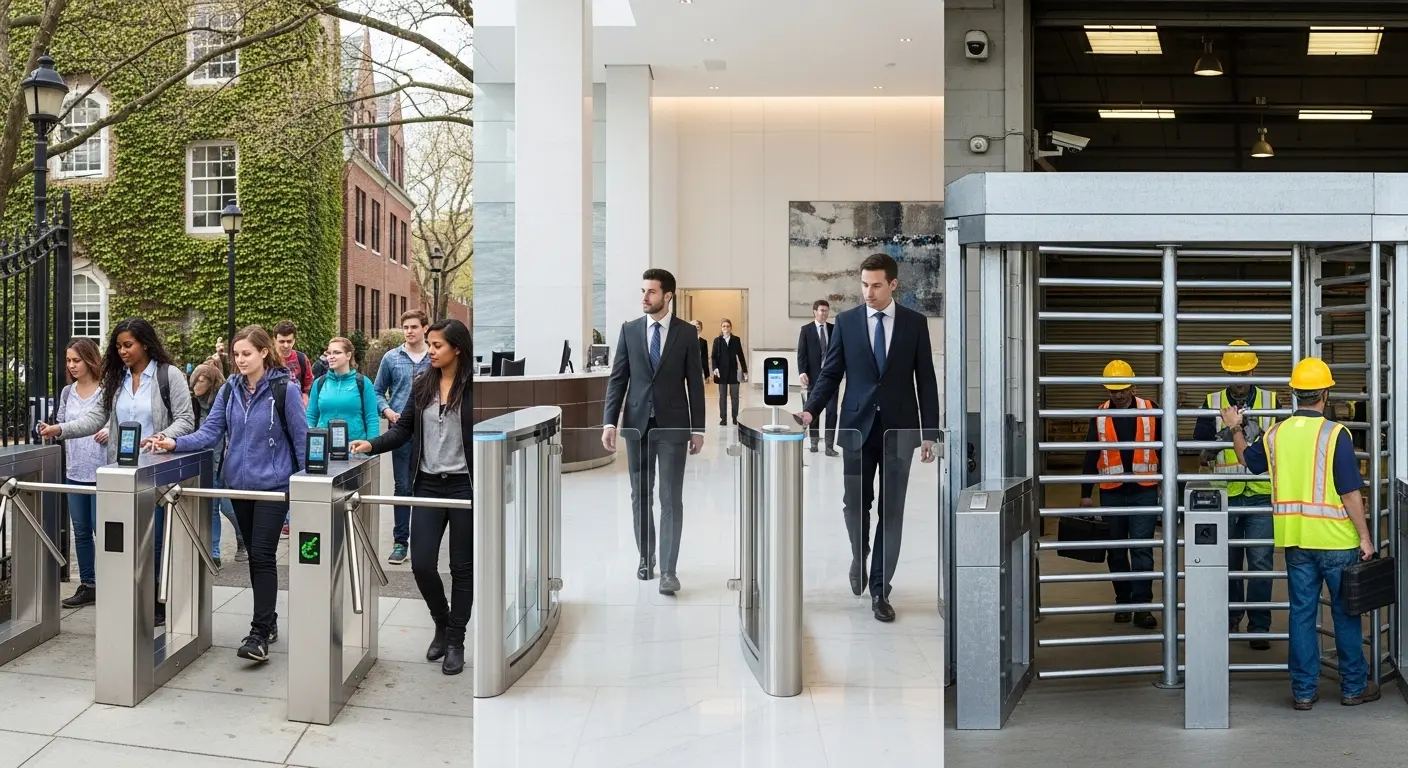
La variedad de entornos de despliegue es más amplia de lo que la mayoría espera.
| Medio ambiente | Tipo de puerta | Credencial Primaria |
|---|---|---|
| Oficinas corporativas | Barrera de flaps o puerta de velocidad | Tarjeta RFID o reconocimiento facial |
| Campus universitarios | Barrera de solapa o trípode | Tarjeta de estudiante o código QR |
| Edificios gubernamentales | Barrera de altura total o de solapas | Tarjeta Biometric Plus (Factor dual) |
| Centros de transporte y aeropuertos | Puerta de velocidad o barrera de flaps | Código de barras o tarjeta de embarque QR |
| Gimnasios y centros de fitness | Trípode o compuerta basculante | Membresía QR o RFID |
| Complejos residenciales | Compuerta basculante o barrera de solapas | RFID para residentes o QR para visitantes |
| Centros de datos | Altura completa | Biométrico más PIN |
| Industrial y manufacturero | De altura completa o trípode | Tarjeta RFID |
Para configuraciones específicas del campus, laPuerta de control de acceso al campus La solución cubre el soporte para la tarjeta de carné de estudiante, Gestión de QR de visitantes, y registro de entradas en tiempo real en una sola configuración. Ironman'sSoluciones para puertas de torniquetes abarca todos estos entornos, con configuraciones específicas para gimnasios, Edificios gubernamentales, Comunidades residenciales, y campus corporativos.
Cómo elegir el sistema de control de acceso adecuado para la puerta de torniquetes
Cinco factores deberían influir en tu decisión. Revisa cada uno antes de comparar las especificaciones del producto.
1. Volumen de tráfico
Empieza con tu requisito de rendimiento en hora punta. Los torniquetes de trípode se manijan alrededor 20 personas por minuto. Las barreras de solapa llegan 40 Para 45. Las compuertas de velocidad superan eso. Elige según tu ventana de 15 minutos más ocupada, no es tu promedio diario.
2. Nivel de seguridad requerido
Define la necesidad de seguridad física antes de elegir un tipo de puerta. Un lobby corporativo necesita disuasión y trayectoria de auditoría. El perímetro de un centro de datos necesita prevención física. Esa diferencia por sí sola determina si una puerta a la altura de la cintura es suficiente o si es necesaria una versión de altura completa.
3. Tipo de credencial
Empareja la credencial con la población real de usuarios. Los empleados que usan la acreditación diaria encajan bien en RFID. Las poblaciones rotativas de visitantes o eventos necesitan código de barras o QR. Las zonas de verificación de identidad de alta seguridad necesitan biometría. Es común mezclar tipos de credenciales entre carriles.
4. Conectividad del sistema
Pregunta con qué plataformas debe conectar la puerta. ¿Tu centro tiene un sistema de RRHH?, Software de asistencia, o un Sistema de Gestión de Edificios? UnSistema de control de acceso a la puerta de torniquetes Que no pueda conectarse a esas plataformas obliga a soluciones manuales que reducen el retorno de toda la inversión.
5. Espacio físico y ancho de carril
Mide tu pasillo de entrada antes de revisar las especificaciones de la puerta. Los anchos estándar de los carriles varían de 550 mm a 900 mm. El cumplimiento de la ADA en la mayoría de entornos comerciales requiere al menos un carril de 900 mm o más ancho.
Errores comunes al instalar un sistema de control de acceso para la puerta de torniquetes
Comprar hardware antes de confirmar la compatibilidad con el software. La puerta solo es útil en la medida en que la plataforma conecta. Verifica siempre que el software del controlador sea compatible con tu plataforma actual de RRHH o gestión de accesos antes de hacer un pedido. Adaptar la compatibilidad después cuesta más que hacerlo bien a la primera.
Especificación subestimada de la detección anti-tailgating. Los sensores infrarrojos de haz único vienen de serie en modelos básicos, pero no son suficientes para despliegues de alto tráfico. En cualquier entorno donde el tailgate sea un riesgo real, especificar detección multihaz o de doble zona como requisito mínimo.
Tratar el precio unitario como la principal métrica de coste. Compuertas modulares con brazos reemplazables, Motor, y las placas de control cuestan menos de mantener durante cinco años que las unidades no modulares más baratas. En 24/7 Entornos, La diferencia entre una puerta de calidad y una unidad económica se hace evidente en el primer año de funcionamiento.
Saltarse un estudio adecuado del lugar. Ancho de carril, Nivelación del suelo, Enrutamiento de cables, y la posición de la fuente de alimentación afectan a la limpieza y fiabilidad de la instalación final. Una inspección previa a la instalación evita los problemas de reestructuración más comunes y elimina los costes sorpresa.
Preguntas más frecuentes: Sistemas de Control de Acceso a la Compuerta de Torniquetes
¿Qué es un sistema de control de acceso a la puerta de torniquetes??
UnSistema de control de acceso a la puerta de torniquetes es una puerta física combinada con verificación electrónica de credenciales que controla la entrada y salida de peatones en lugares seguros. Aparece una credencial — tarjeta, biométrico, o código QR — lo comprueba con una lista de usuarios autorizados, y abre o niega la barrera en consecuencia. La mayoría de los sistemas también registran cada evento de entrada para fines de auditoría e informes.
¿Qué tipos de credenciales funcionan con un sistema de control de acceso a la puerta de torniquetes??
La mayoría de los sistemas modernos soportan tarjetas RFID, Códigos QR, Códigos de barras, Lectores de huellas dactilares, Reconocimiento facial, Escáneres de iris, Lectores de Palm Vein, y credenciales móviles vía Bluetooth o NFC. La elección correcta depende de tus necesidades de seguridad, Tipo de población de usuario, y necesidades de velocidad de paso.
¿Cuál es el mejor tipo de puerta para un sistema de control de acceso a oficinas corporativas??
Los torniquetes con barrera de solapa son la opción más común para vestíbulos de edificios corporativos. Ofrecen un alto rendimiento (hasta 45 personas por minuto), un perfil visual limpio, y soporte completo para lectores RFID y biométricos. Las compuertas de velocidad son la opción premium para entradas arquitectónicamente exigentes o con mucho tráfico.
¿Puede un sistema de control de acceso a la puerta de torniquetes conectarse con el software de RRHH??
Sí. Los controladores modernos y las plataformas de gestión en la nube se conectan con los sistemas de RRHH mediante API. Los nuevos empleados obtienen acceso automático al incorporarse, y los empleados que se marchan pierden el acceso en cuanto salen del sistema. No se requiere ningún paso manual de desactivación de tarjetas.
¿Cuánto cuesta un sistema de control de acceso a la puerta de torniquetes??
El coste del sistema varía según el tipo de compuerta, Tecnología de credenciales, Número de carriles, y requisitos de software. Los sistemas RFID basados en trípode representan el extremo inferior del rango de inversión. Los despliegues de barreras de flap o de puerta de velocidad empresariales con gestión en la nube y lectores biométricos requieren presupuestos significativamente mayores. Contacta directamente con Ironman Turnstile para obtener un presupuesto específico de configuración basado en los requisitos reales de tu obra.
