


Puerta de torniquetes de la estación: ¿Qué tipo de puerta se adapta a tu emisora?, Sistema AFC, y Requisito de Rendimiento
2026-04-05


Para una estación de tren o andén de metro de alto volumen, La puerta correcta del torniquete de estación es una barrera de solapas para los carriles de acceso estándar y una puerta inteligente de velocidad para los premium, Terminales de alto rendimiento. Ambos entregan entre 40 y 80 ppm por carril, integración completa de billetes AFC, y la resiliencia de la propiedad intelectual exterior adecuada para un entorno de estación de transporte. Según la NFPA 101 Código de Seguridad Vital, Cada puerta de estación en una ruta de salida designada debe abrirse de forma segura dentro de la zona 3 segundos en alarma de incendio o corte de energía.
Esta guía presenta a los responsables de adquisiciones de la autoridad de tránsito, Gerentes de proyecto de la emisora, Integradores de sistemas AFC, y contratistas EPC una tabla comparativa de tipos de compuertas sobre criterios específicos de transporte, Una sección de coincidencia de escenarios de estación, Una fórmula de rendimiento de eventos en vivo, una matriz de integración AFC, Guía de clasificación IP al aire libre, Requisitos de la ADA, y un camino directo hacia un presupuesto directo de fábrica. Empieza con la zona de puertas de la estación Ironman en elPágina de torniquetes peatonales en la estación de tren.
Tipos de compuertas de torniquetes de estación — comparados según criterios específicos del transporte público
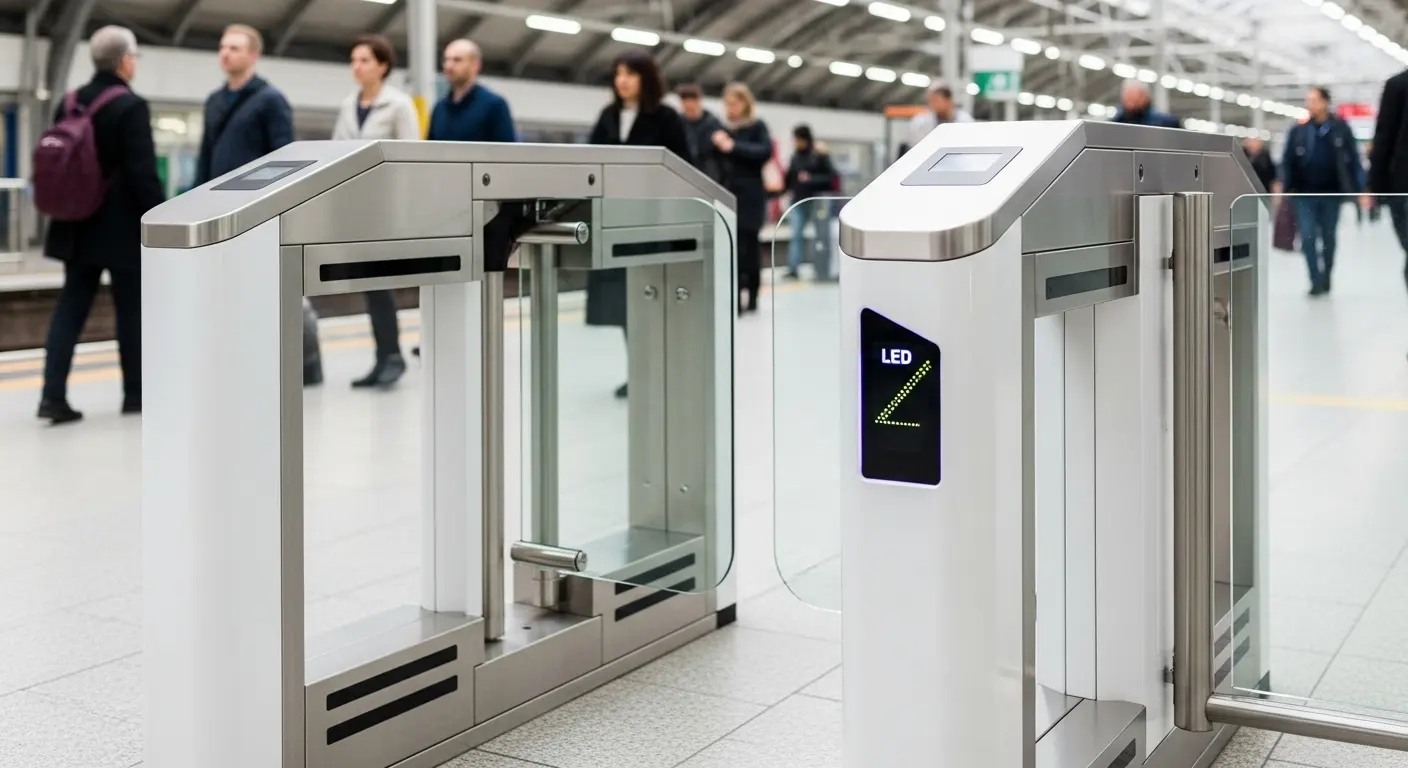
Cinco tipos de compuertas cubren toda la gama de entornos de estación. Cada una cumple con una función diferente de estación, Carga de rendimiento, y el requisito de resiliencia al aire libre. La siguiente tabla los compara según los criterios que importan para una especificación de transporte.
| Tipo de puerta | Rendimiento | Integración AFC | IP exterior | ADA / Pasillo Ancho | Cumplimiento de tarifas | Mejor contexto de la emisora | Alcance de la unidad |
|---|---|---|---|---|---|---|---|
| Barrera de solapas | 40–60 ppm | RFID, QR, EMV, NFC | IP54 / IP65 opt. | Variante de carril ancho | Alto | Andén ferroviario, Metro Estándar Lane | $450–3.000 dólares |
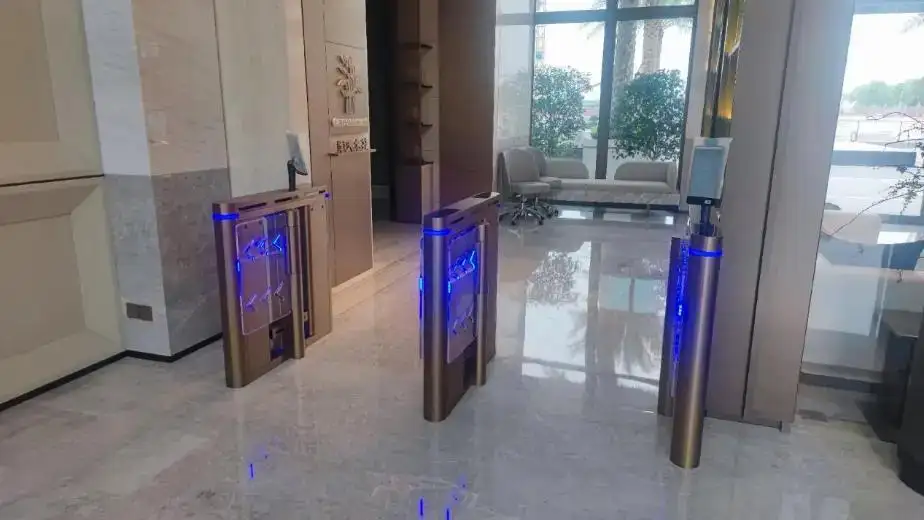
| Puerta de Velocidad Inteligente | 50–80 ppm | RFID, QR, EMV, NFC, biométrico | IP54 | Variante de carril ancho | Moderado | Terminal premium, Estación de alto rendimiento | $1,300–8.000 dólares |
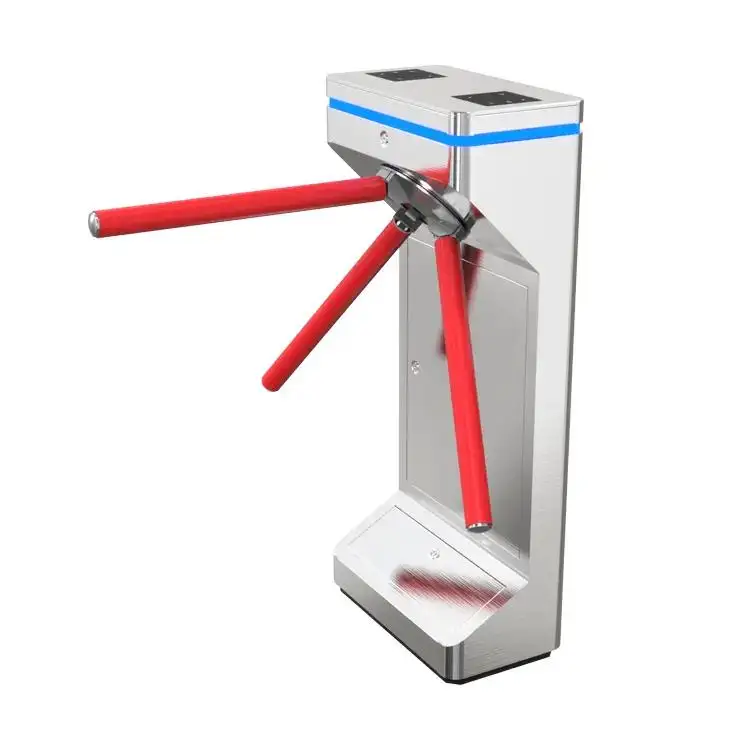
| Torniquete Trípode | 25–40 ppm | RFID, QR, código de barras | IP54 | Carril separado bajo la ADA | Moderado | Entrada secundaria, BRT, Reforma económica | $200–1.200 dólares |
| Torniquete de altura completa | 20–30 ppm | RFID, biométrico | IP65 | Carril separado bajo la ADA | Máximo | Plataforma exterior sin vigilancia, perímetro | $600–4.000 dólares |
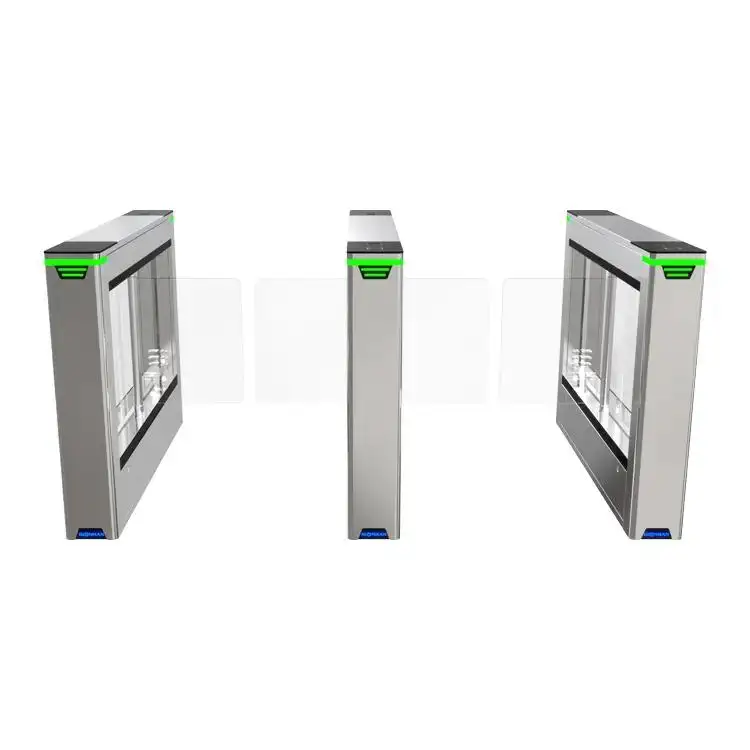
| Compuerta corredera de cristal | 30–50 ppm | RFID, QR, NFC | IP54 | Variante de carril ancho | Moderado | Entrepisos premium, Terminal de la ciudad | $800–4.000 dólares |
Barrera de solapas y puerta inteligente de velocidad — carriles de tarifas de estaciones de alto volumen
La barrera de solapas es la puerta estándar de torniquetes para los carriles de pasajeros de estaciones de tren y metro de alto volumen. A 40–60 ppm por carril, Elimina el pico de pasajeros durante un evento de espera de trenes sin formar cola. Su sistema anti-tailgating basado en sensores activa una alarma antes de que una segunda persona termine el paso — combinando la aplicación física y electrónica del acceso al tráfico por encima de lo que ofrece un brazo de trípode por sí solo.
La puerta de velocidad inteligente se adapta a terminales ferroviarios de alto rendimiento y a entornos de estaciones urbanas premium. A 50–80 ppm y un tiempo de desbloqueo de 0,2 segundos, Procesa volúmenes máximos de pasajeros más rápido que cualquier otro tipo de puerta a la altura de la cintura. Para la puerta inteligente de velocidad Ironman usada en despliegues de estaciones premium, véase elPágina de torniquetes Smart Speed Gate.
Torniquete de trípode y altura completa — posiciones secundarias y exteriores para las estaciones
Los torniquetes trípode siguen siendo la puerta de entrada secundaria más rentable para las entradas secundarias, Puestos de adaptación presupuestaria, y carriles estándar BRT. A $200–$1.200 por carril y 25–40 ppm, ofrecen integración RFID/QR AFC al menor coste de capital por carril. Se requiere un carril de circunvalación independiente según la ADA junto a cada banco de puertas de trípode.
Los torniquetes de altura completa se adaptan a las posiciones exteriores no tripuladas de las estaciones — perímetros de andenes expuestos, Entradas secundarias sin personal, y perímetros de barrera de acceso que requieren control físico de acceso. Su clasificación IP65 al aire libre y su perfil físico de jaula eliminan los saltos en posiciones sin supervisión. Para el torniquete octogonal inclinado Ironman usado en despliegues de estaciones económicas, véase elPágina de torniquete octogonal inclinado.
Compuerta de torniquetes de estación por tipo de estación — cuál puerta pertenece a dónde
El tipo de estación y la carga punta de pasajeros determinan la especificación de la puerta de puerta, no solo la categoría de la línea de transporte. Una terminal ferroviaria de alto volumen y una parada de tren ligero en el mismo sistema requieren tipos de puertas y conteos de carriles completamente diferentes.
| Tipo de estación | Puerta recomendada | Calles | Requisito clave |
|---|---|---|---|
| Terminal ferroviario de gran volumen | Barrera de solapas | 4–10 + ADA | Rendimiento máximo, AFC, Anti-tailgating, ADA |
| Andén estándar del metro | Barrera de solapas | 2–5 + ADA | Rendimiento, AFC, ADA |
| Terminal BRT | Trípode o barrera de solapas | 2–4 + ADA | Bajo coste, RFID/QR AFC, Circunvalación ADA |
| Parada de tren ligero | Trípode o barrera de solapas | 1–3 + ADA | Huella compacta, RFID/QR AFC, ADA |
| Plataforma exterior sin vigilancia | Torniquete de altura completa | 1–2 | IP65, Control máximo de perímetro |
| Terminal de ciudad premium / Entresuelo | Puerta de velocidad inteligente o puerta deslizante de cristal | 2–6 | Estética, Alto rendimiento, AFC |
| Secundaria / Entrada fuera de hora punta | Trípode o trípode de arco inclinado | 1–2 | Bajo coste, AFC, Circunvalación ADA |
Terminal ferroviario de alto volumen y andenes del metro
Una terminal ferroviaria de alto volumen requiere un rendimiento mínimo de bancos de puertas de 200+ Pasajeros por minuto durante los eventos de mayor actividad en vivo. A 40–60 ppm por carril barrera de flaps, Un grupo de 4–5 carriles cubre este requisito, con un carril de reserva para los periodos de mantenimiento. Basado en nuestro análisis de despliegue en estaciones de tren, El fallo de rendimiento más constante en las instalaciones de puertas de estación es el ajuste de la tasa media de entrada por hora, en lugar del pico de eventos de permanencia — donde 80–150 pasajeros convergen en una ventana de 60–90 segundos.
Los andenes estándar de metro con capacidad de 100–200 ppm necesitan 2–4 carriles barrera de solapas más un carril de pasillo ancho ADA en cada banco de puertas. Para la puerta corredera de cristal Ironman usada en terminales de ciudad premium, véase elPágina de torniquetes de puerta corredera de cristal.
Terminales BRT, Paradas de tren ligero, y Entradas Secundarias
Las terminales del BRT y las paradas de tren ligero operan a cargas punta más bajas que una terminal ferroviaria principal. Un torniquete de trípode a 25–40 ppm maneja el volumen en la mayoría de los puestos de billetes de BRT y tren ligero con el coste de capital por carril más bajo. Según los datos de la Guía BRT de ITDP, Alcance de compuertas retráctiles 60 ppm, mientras que los trípodes de brazo giratorio alcanzan entre 25 y 40 ppm en la misma posición. Especifica una barrera de flaps donde una estación BRT sirva a un importante centro de transferencia con cargas pico más altas.
Las entradas secundarias y fuera de las estaciones punta necesitan uno o dos carriles trípode más un carril de circunvalación ADA. La configuración de trípode de arco inclinado se adapta a posiciones de huella estrechas donde el ancho estándar de un armario de trípode excede el espacio disponible en el pasillo. Para la configuración de torniquetes de trípode de arco inclinado, véase elPágina del torniquete de trípode de arco inclinado.
Integración AFC para compuertas de torniquetes de estación
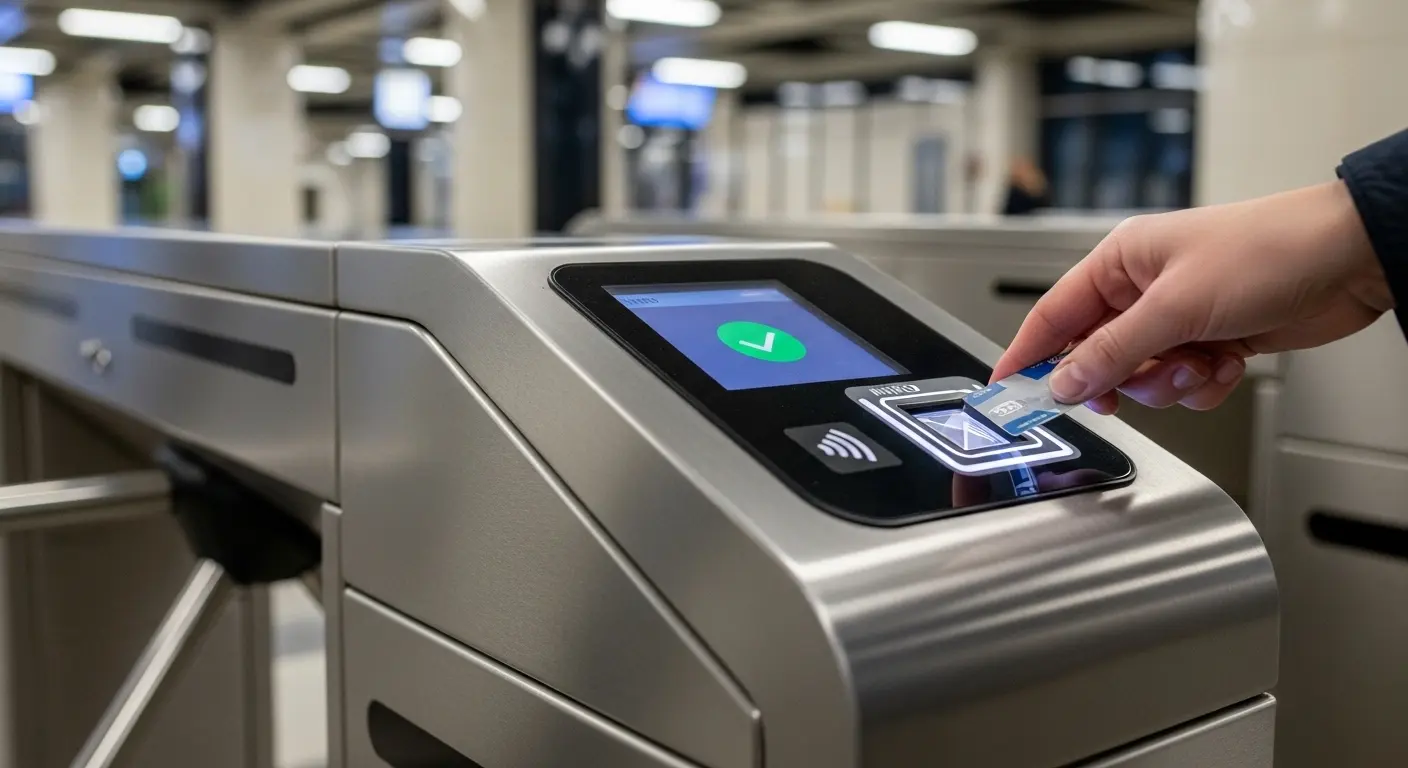
Una puerta de torniquetes de estación debe aceptar la credencial de billetes de la autoridad de transporte desde la fase de especificación, no como configuración posterior a la instalación. Cada protocolo AFC requiere hardware lector específico integrado en la unidad de puerta en la fabricación.
| Credencial de Billetes | Protocolo | Hardware de lector | Tipos de compuertas compatibles |
|---|---|---|---|
| Tarjeta de tránsito RFID | ISO 14443 / Wiegand | 13.56 Lector de MHz | Barrera de solapas, Puerta de velocidad, trípode, Altura total |
| Billete electrónico QR (móvil o impreso) | TCP/IP | 2Escáner de códigos de barras D | Barrera de solapas, Puerta de velocidad, trípode |
| Tarjeta bancaria sin contacto EMV | ISO 14443 | Lector sin contacto EMV | Barrera de solapas, Puerta de velocidad |
| Pago móvil NFC | ISO 18092 / HCE | Lector NFC | Barrera de solapas, Puerta de velocidad |
| Reconocimiento facial | TCP/IP | Módulo de cámara IP | Barrera de solapas, Puerta de velocidad |
| Código de barras legado / Banda magnética | RS232 | Desliza / lector de escaneo | Trípode (Solo sistemas heredados) |
Basado en nuestra experiencia en el despliegue de la estación, la diferencia de especificación AFC más consistente es la ausencia de una configuración de doble lector — una 13.56 Lector RFID MHz y un escáner QR en la misma unidad de puerta. Esto cubre tanto a usuarios de tarjetas de transporte como a usuarios de billetes electrónicos de un solo carril, sin canales separados para cada tipo de credencial. Confirma tanto el protocolo AFC como el hardware lector requerido antes de hacer el pedido de puerta. Para la puerta anti-tailgating de Ironman con configuración multicredencial, véase elPágina de la puerta anti-tailgating AB para torniquetes.
Planificación de Rendimiento y Calificación IP Exterior para Puertas de Estación
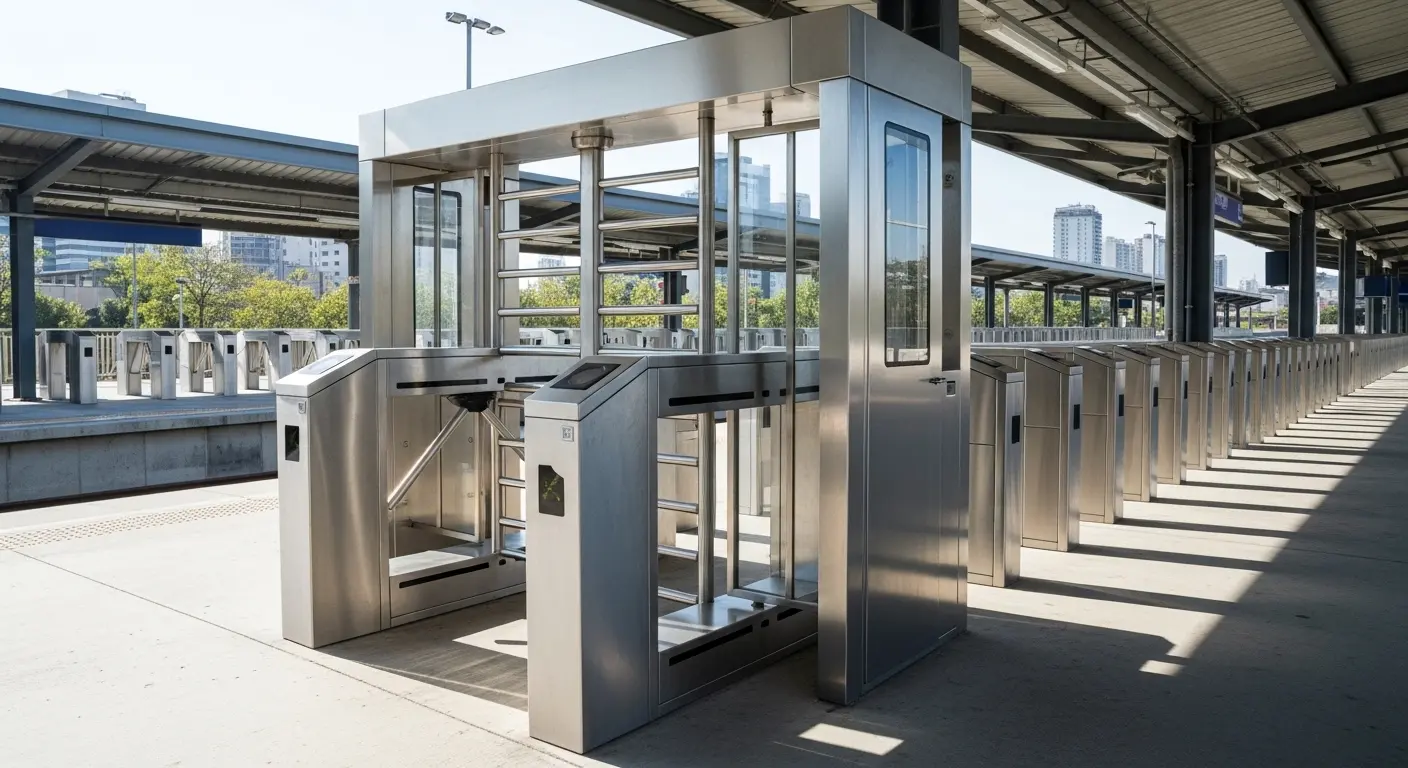
Dos decisiones de especificación provocan la mayor reestructuración en los proyectos de puertas de estación: Especificar poco el número de carriles debido a cálculos incorrectos de rendimiento, y la subespecificación de la calificación IP exterior para el entorno físico de la emisora.
Fórmula de Rendimiento de Eventos en Vivo
Carriles = Pasajeros por tren ÷ Ventana de Dwell (sobras) × 60 ÷ Puerta ppm
Ejemplo 1 — Terminal ferroviaria, 600-Tren de pasajeros, 90-Segunda permanencia, barrera de solapas en 50 ppm:
600 ÷ 90 × 60 = 400 ppm. 400 ÷ 50 = 8 carriles →8 Carriles mínimos con barrera de solapas.
Ejemplo 2 — Parada de tren ligero, 150 Pasajeros, 60-Segunda permanencia, Trípode en 35 ppm:
150 ÷ 60 × 60 = 150 ppm. 150 ÷ 35 = 4.3 carriles →5 Carriles mínimos de trípode.
Tamaño para el pico del evento en vivo — no la tasa media de inscripción por hora. El tamaño a tasa media especifica consistentemente menos el número de carriles para despliegues de estaciones de alto volumen.
Clasificación IP al aire libre para entornos de estaciones
| Entorno de la estación | IP mínimo | IP recomendado | Justificación |
|---|---|---|---|
| Estación cerrada cubierta | IP42 | IP54 | Polvo, Salpicaduras ocasionales |
| Andén semi-cubierto | IP54 | IP54 | Salpicaduras de lluvia, Polvo impulsado por el viento |
| Plataforma exterior expuesta | IP54 | IP65 | Lluvia directa, Ciclo de temperatura |
| Costera / Ambiente húmedo | IP65 | IP65 | Corrosión, aire salado, Alta humedad |
| Terminal a nivel de calle del BRT | IP54 | IP65 | Exposición completa al aire libre |
En nuestra experiencia con despliegues de puertas de estación al aire libre, cada proyecto en el que se especificaba hardware IP54 para una plataforma completamente expuesta requería una actualización a IP65 dentro de 12 meses — impulsados por la entrada de condensación en el controlador de compuerta debido a ciclos de temperatura entre el día y los mínimos nocturnos. Especificar IP65 para cualquier andén exterior expuesto en el punto de pedido.
Requisitos ADA y de seguridad para puertas de torniquetes de estación
Cumplimiento de la ADA y NFPA 101 Las salidas de emergencia a prueba de fallos son requisitos obligatorios para cada despliegue de puertas de torniquetes de estación — no son añadidos opcionales.
Requisitos de puertas accesibles según la ADA
Bajo las normas ADA para el diseño accesible (EE. UU.. Junta de Acceso), Cada billete de entrada debe incluir al menos un pasillo accesible con un mínimo de 32 pulgadas (812 milímetro) Ancho transparente. La especificación moderna preferida del transporte público es 48 pulgadas o más ancha — silla de ruedas adaptable, paseante, y acceso al equipaje simultáneamente. El carril ADA debe estar en el mismo banco de puertas, no en una ubicación separada de la estación. Para despliegues de estaciones que sirven a funciones gubernamentales o de transporte público, véase elPágina de la puerta de acceso a instalaciones gubernamentales.
NFPA 101 Salida de emergencia a prueba de fallos
Según la NFPA 101 Código de Seguridad Vital, Cada puerta de torniquetes de estación en una vía de salida de emergencia designada debe retraerse hasta la posición completamente abierta dentro de 3 segundos de activación de la alarma de incendios o pérdida de corriente de red — y permanecer abierto durante toda la duración de la emergencia. El disparador de seguridad debe conectarse directamente al panel de control de alarmas de incendios de la estación mediante una entrada de contacto seco. Un comando basado en software sujeto a un retardo de red no satisface este requisito. Confirmar la integración del panel de incendios y el tiempo de respuesta de seguridad en la fase de especificación — antes de la aprobación del diseño.
Obtener un presupuesto directo de fábrica para la puerta de tu torniquete de estación
Cuatro artículos son suficientes para un presupuesto completo directo de fábrica dentro 12 Horario de atención.
- Define el tipo de estación y la carga máxima: Terminal ferroviaria / Andén del metro / Terminal BRT / Parada de tren ligero / Entrada secundaria + Capacidad del tren y ventana de permanencia en segundos
- Calcula tu recuento de carriles: Aplica la fórmula del evento en vivo — pasajeros por tren ÷ segundos de espera × 60 ÷ ppm de puerta = carriles; añadir un carril ancho de pasillo ADA por banco de puertas
- Confirmar protocolo AFC y calificación IP: RFID / QR / EMV / NFC — confirmar el protocolo de billetes de la autoridad de transporte; confirmar la certificación IP exterior para la exposición ambiental de la emisora
- Envía tu informe de la emisora: Visita el Centro de soluciones Para un torniquete directo de fábrica, presupuesto dentro de un torniquete 12 Horario de atención, con CE, ISO9001, FCC, y la documentación de certificación RoHS incluída
Preguntas frecuentes
Q1: ¿Qué tipo de puerta de torniquetes es la mejor opción para una estación de tren??
Para una estación de tren de alto volumen, Una barrera de solapas es la mejor puerta de torniquetes para los carriles de tarifa estándar, proporcionando entre 40 y 60 ppm por carril, Anti-tailgating basado en sensores, y la integración total de billetes AFC (RFID, QR, EMV, NFC). Una puerta de velocidad inteligente a 50–80 ppm se adapta a terminales premium y a estaciones urbanas de alto rendimiento donde el rendimiento es la principal preocupación operativa. Un torniquete trípode a 25–40 ppm se adapta a las entradas secundarias y a las posiciones de remodelación económica entre 200 y 1.200 dólares por carril. Un torniquete de altura completa a 20–30 ppm permite perímetros de plataformas exteriores no tripuladas, donde se requiere el máximo control físico de acceso y la resistencia IP65 al aire libre. El tipo correcto de puerta depende de la función de la estación — no solo de la categoría de la línea de transporte.
P2: ¿Cómo se integra una puerta de torniquetes de estación con los sistemas de billetes de la AFC??
Una puerta de torniquetes de estación se integra con los sistemas de billetes AFC mediante hardware lector específico integrado en la unidad de puerta: un 13.56 MHz ISO 14443 Lector RFID para tarjetas de transporte y tarjetas bancarias EMV, un lector de códigos de barras 2D para billetes electrónicos QR, an ISO 18092 Lector NFC para pago móvil, y un módulo de cámara de reconocimiento facial para verificación biométrica. La mayoría de las autoridades de transporte ahora especifican una configuración de doble lector — RFID más escáner QR — por lo que un carril de puerta cubre tanto el acceso a la tarjeta de transporte como el escaneo de billetes electrónicos sin carriles separados. Confirmar el protocolo AFC de la autoridad de tránsito y el hardware lector requerido en la fase de especificación. Los cambios en el hardware del lector tras la instalación suelen añadir entre 3 y 6 semanas a la puesta en marcha y aumentar el coste del proyecto entre un 8 y un 15%.
P3: ¿Qué rendimiento debe manejar una puerta de torniquetes de estación??
Utiliza la fórmula del evento de espera: Pasajeros por tren ÷ ventana de alojamiento (sobras) × 60 ÷ ppm de puerta = carriles. Para un tren de 600 pasajeros con una permanencia de 90 segundos y una barrera de solapas en 50 ppm, El recuento mínimo de carriles es 8 Carriles. Para una parada de tren ligero para 150 pasajeros, con una permanencia de 60 segundos y un trípode en 35 ppm, El mínimo es 5 Carriles. Tamaño para el pico del evento en vivo — no la tasa media de inscripción por hora. Según los datos de la Guía BRT de ITDP, Alcance de compuertas retráctiles 60 ppm, mientras que los trípodes de brazo giratorio alcanzan entre 25 y 40 ppm en la misma posición.
P4: ¿Qué clasificación IP necesita una puerta de torniquetes de estación exterior??
Para un andén semi-cubierto con salpicaduras de lluvia intermitentes, IP54 es la clasificación IP mínima aceptable para exteriores para una barrera de torniquetes en una estación. Para una plataforma exterior completamente expuesta — lluvia directa, Ciclo de temperatura, entornos costeros o de alta humedad — IP65 es la especificación correcta. En nuestra experiencia de despliegue en estaciones exteriores, cada proyecto en el que se especificaba hardware IP54 para una plataforma completamente expuesta requería una actualización a IP65 dentro de 12 meses — impulsados por la entrada de condensación en el controlador de compuerta desde ciclos de temperatura de día a noche. Especificar IP65 para cualquier andén exterior expuesto en el punto de pedido.
P5: ¿Cuáles son los requisitos ADA para una puerta de torniquetes de estación?
Bajo las normas ADA para el diseño accesible (EE. UU.. Junta de Acceso), Cada billete de entrada debe incluir al menos un pasillo accesible con un mínimo de 32 pulgadas (812 milímetro) Ancho transparente. La especificación preferida de transporte público para nuevas construcciones es 48 pulgadas o más ancha — silla de ruedas adaptable, paseante, y acceso para equipajes desde un solo carril. El carril ADA debe formar parte del mismo grupo de puertas, no en una ubicación separada de la estación. Los torniquetes trípode y de altura completa requieren un carril ADA separado junto al grupo estándar de puertas — las barreras de solapas y las compuertas inteligentes están disponibles en configuraciones de carril ancho que cumplen con el requisito ADA dentro de la misma unidad.
P6: ¿Cuál es el requisito de seguridad para una puerta de torniquete de estación?
Según la NFPA 101 Código de Seguridad Vital, Cada puerta de torniquetes de estación en una vía de salida de emergencia designada debe retraerse hasta la posición completamente abierta dentro de 3 Segundos de activación de la alarma de incendios o pérdida de energía de red, y permanecer abierto durante toda la duración del evento de emergencia. El disparador de seguridad debe conectarse directamente al panel de control de alarma de incendios de la estación mediante una entrada de contacto seco; un comando de software sujeto a retardo en la red no cumple este requisito. Un sistema de anulación manual de acción simple también debe estar disponible desde ambos lados de la puerta en todo momento. Confirmar la integración del panel de incendios y el tiempo de respuesta a prueba de fallos en la fase de especificación, Antes de la aprobación del diseño.
Tres decisiones que definen la especificación de la compuerta de tu torniquete de estación
Coincidir el tipo de puerta con la función de la estación y la carga máxima de eventos de permanencia — no la tarifa media por hora. Confirma el protocolo de venta de billetes AFC y la configuración del lector dual en el punto de pedido. Especifica IP65 para cualquier plataforma exterior expuesta desde el principio. Estas tres decisiones evitan los escenarios de reestructuración más comunes en proyectos de puertas de estación y aseguran que el sistema de puertas supere las pruebas de aceptación de la autoridad de transporte en el primer intento. Envía tu tipo de estación, Carga del tren, Ventana de Dwell, Protocolo AFC, y el requisito de propiedad intelectual exterior a laCentro de soluciones Para un torniquete directo de fábrica, presupuesto dentro de un torniquete 12 Horario de atención.
